
CFA Institute Interactive Assessment
Turning behavioral insights into UX improvements through personalized decision support.


OVERVIEW
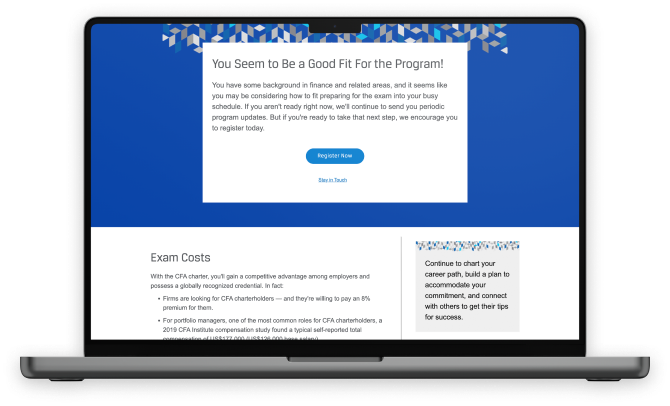
A personalized experience designed to guide users through a complex professional decision.
The CFA Institute Level I exam is a significant commitment, requiring candidates to invest substantial time and preparation before sitting for the test. CFA Institute wanted to create a better way to help prospective candidates understand whether they were ready while providing guidance and resources to help them continue their preparation.
I designed and developed an interactive readiness assessment that evaluated a candidate's preparation level, delivered personalized recommendations, and connected users with relevant resources based on their individual needs. Rather than creating a pass/fail experience, the assessment was designed to support candidates at every stage of their journey—helping those who were ready move toward registration while encouraging others to continue preparing.
HIGHLIGHTS
MY ROLE
Designing an experience that continued to evolve long after launch.
I designed and developed the assessment experience within Ion, owning the implementation from lead capture through personalized results.
My responsibilities included building the lead capture experience, creating branching question paths based on candidate type, implementing the scoring logic, configuring personalized result pages, and ensuring the experience functioned correctly across each possible user path.
Following launch, I analyzed performance data to identify areas of friction within the experience and proposed updates to improve completion rates and lead capture.
THE CHALLENGE
Transform a marketing assessment into a trusted decision-making tool.
Preparing for the CFA Level I exam requires a significant investment of time, money, and effort. Candidates who underestimate the commitment required may struggle after registering, creating a poor experience for both the candidate and CFA Institute.
The challenge was creating an experience that provided honest guidance without discouraging prospective candidates. Someone who was not yet ready was not necessarily a lost candidate—they were someone who needed additional preparation, education, and resources before taking the next step.
The assessment needed to balance candidate support with CFA Institute's goal of building relationships with future exam candidates.
DESIGN DECISIONS
Every interaction was designed to build confidence while generating meaningful business insights.
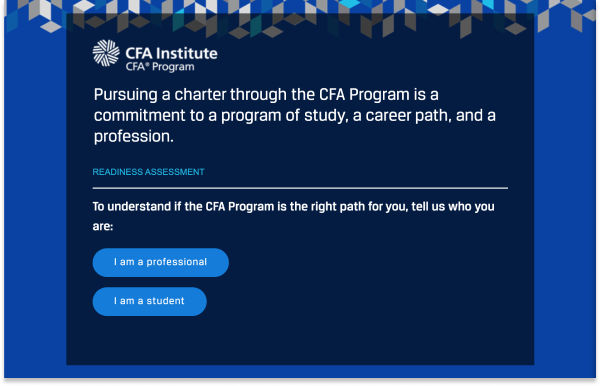
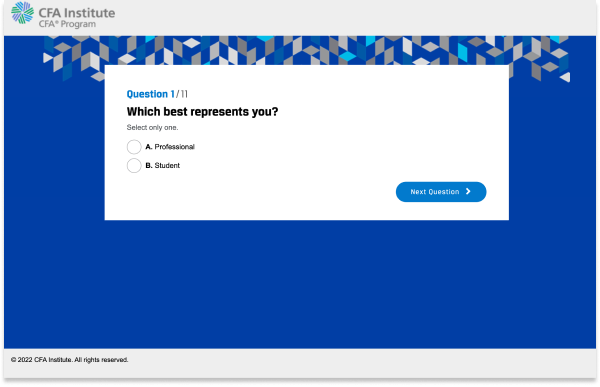
The assessment was built around a series of questions designed to understand a candidate's preparation, goals, and anticipated challenges. The experience began by identifying whether a user was a student or working professional, allowing the assessment path and recommendations to better reflect their circumstances.
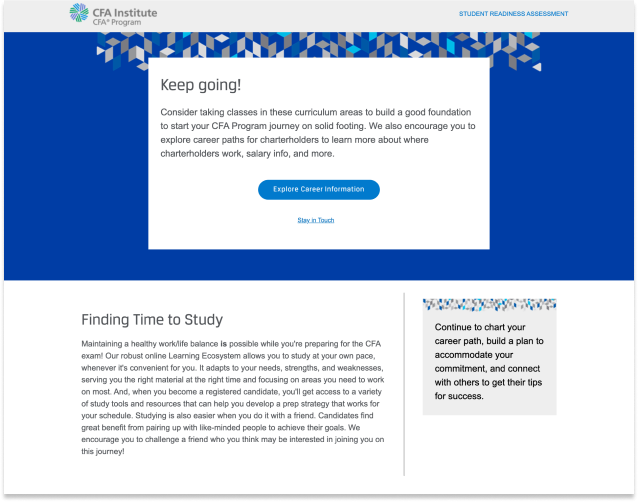
Behind the scenes, user responses were evaluated through a scoring model that categorized candidates into one of three readiness levels: ready, close to ready, or needing additional preparation. The scoring logic was defined by CFA Institute stakeholders and translated into the interactive experience within Ion.
My role was to turn that strategy into a functional digital experience—building the branching logic, implementing the scoring model, and creating the personalized results experience.
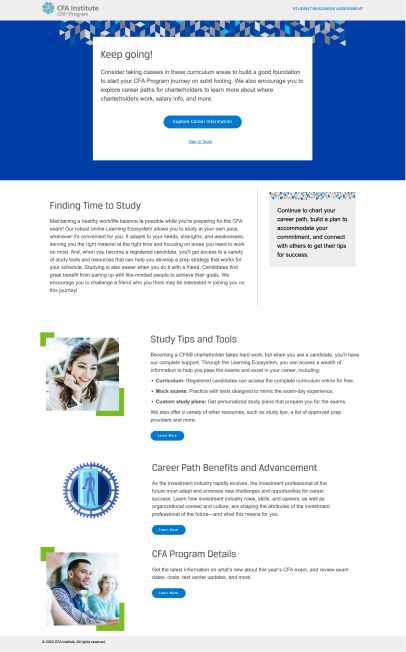
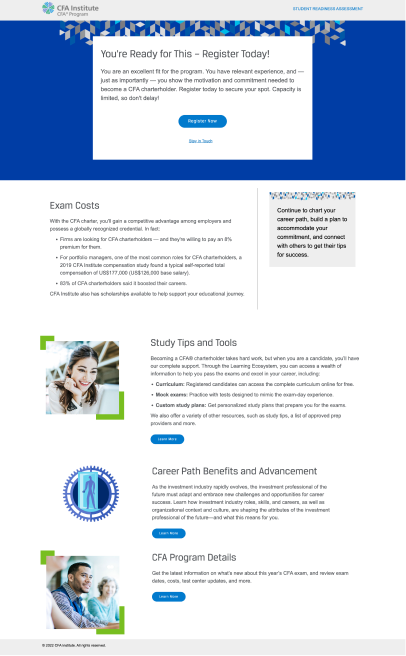
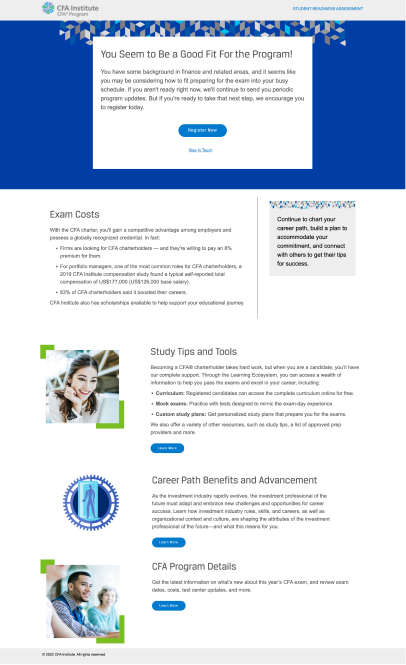
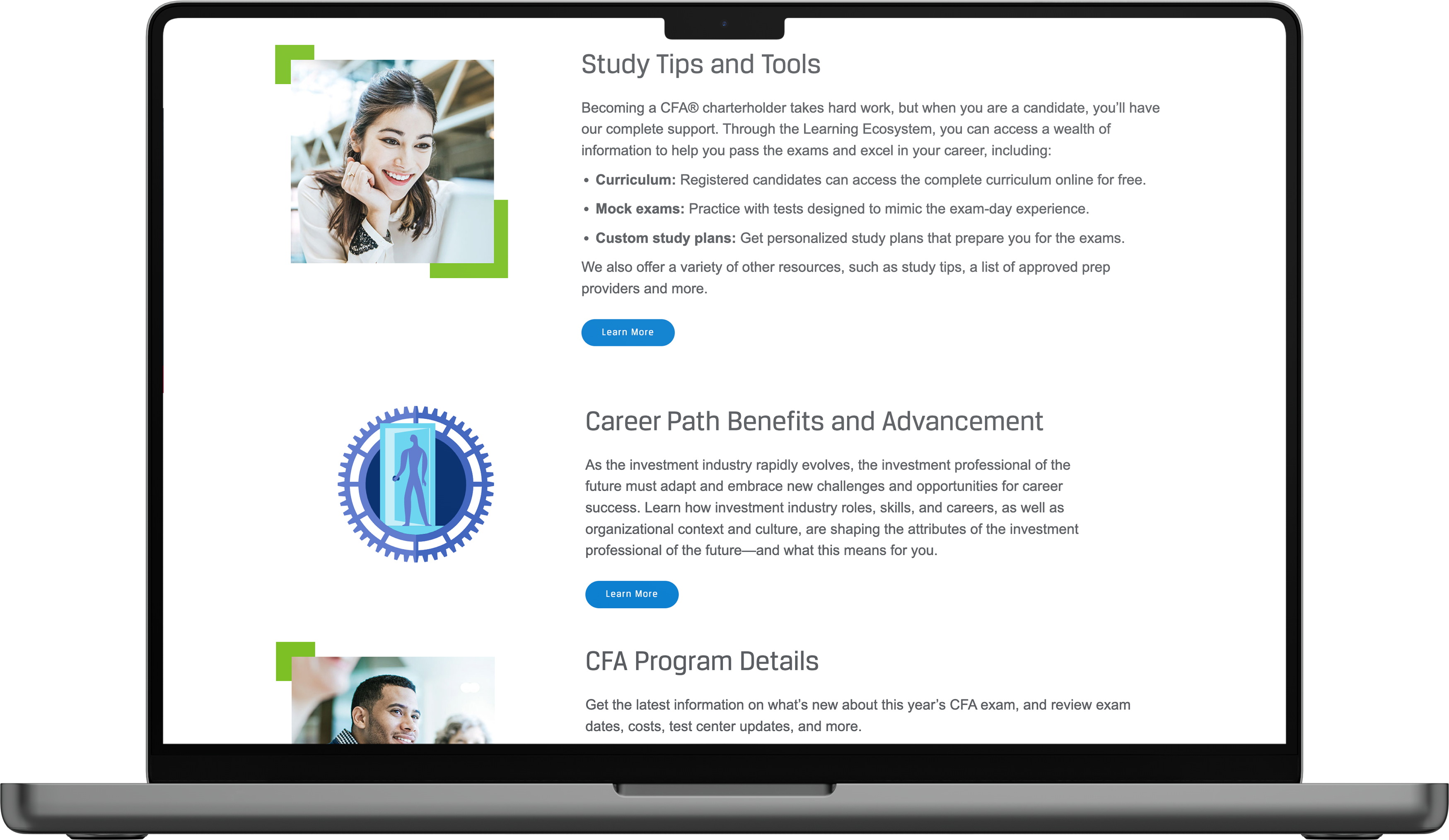
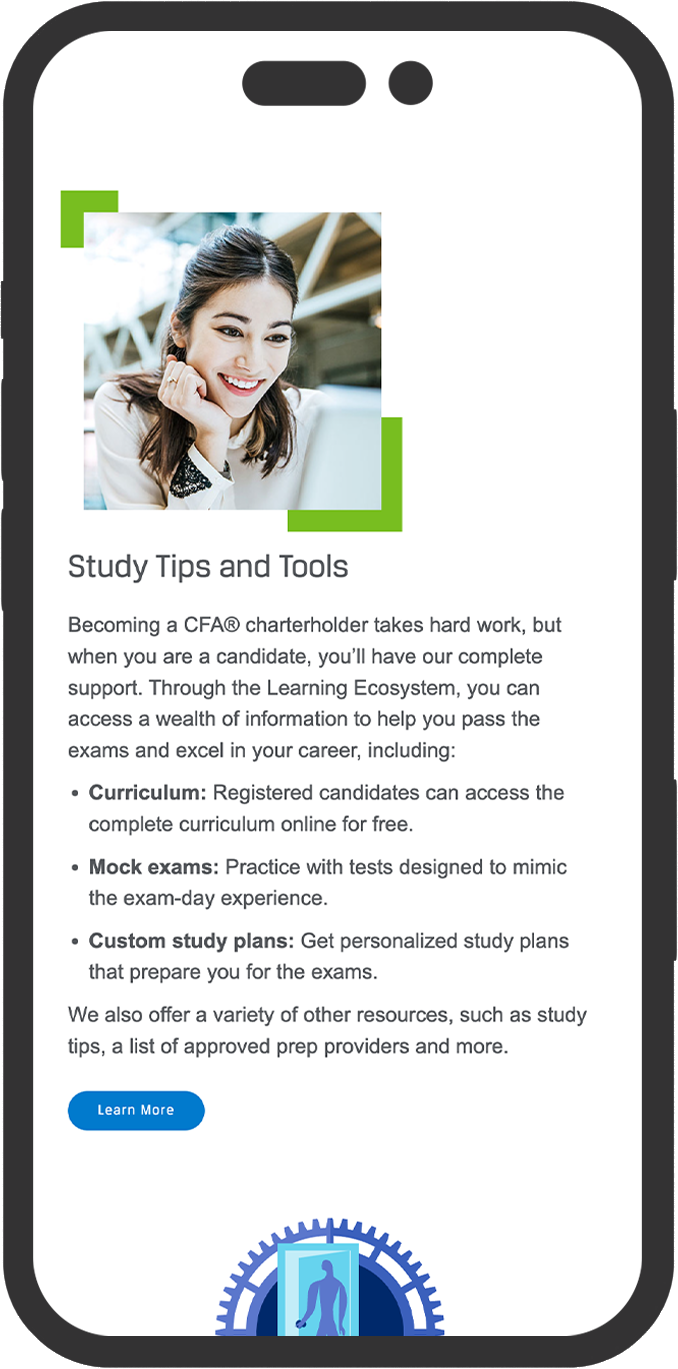
A key consideration was ensuring that every result provided value. Rather than presenting an unfavorable result as a dead end, the experience encouraged continued progress by connecting candidates with relevant study resources, program information, and preparation guidance.
The results pages also incorporated dynamic content based on user responses. For example, candidates who identified exam cost as a primary concern could receive additional information about career opportunities and potential return on investment, helping address specific barriers within their decision-making process.
OPTIMIZATION AFTER LAUNCH
Behavioral data revealed opportunities that informed the next generation of the experience.
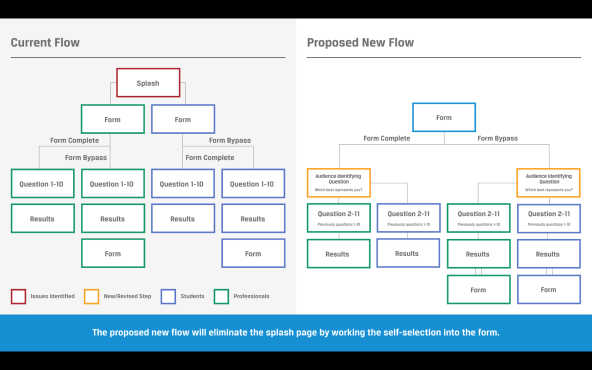
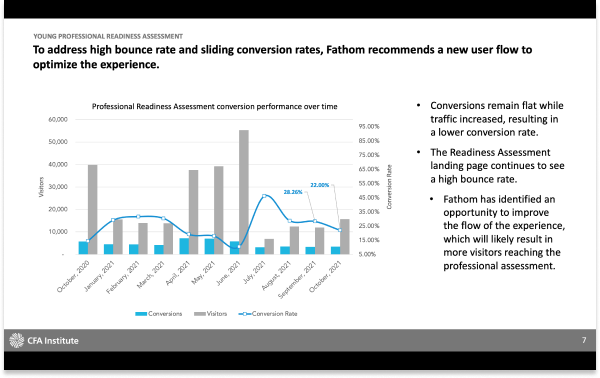
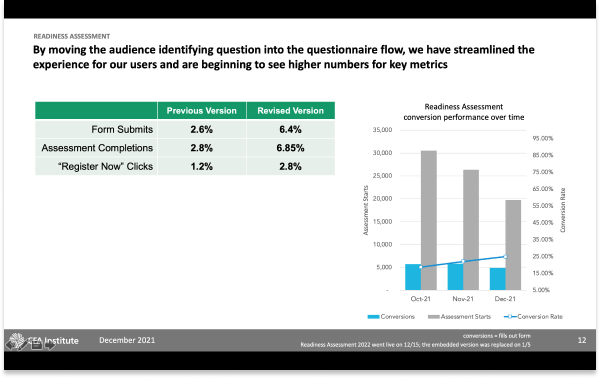
After launch, I reviewed performance data to identify opportunities to improve both assessment completion and lead capture. One significant point of friction occurred when users were asked to provide personal information before beginning the assessment. While allowing users to skip the form reduced abandonment, it also meant losing potential leads. I hypothesized that allowing users to experience the value of the assessment first would create a better opportunity to capture information later in the journey. I added a lightweight "stay in touch" option within the results experience, allowing users to provide their information after receiving their personalized recommendation. This change resulted in an 18% opt-in rate and generated 8,000 additional form completions. I also identified substantial drop-off at the beginning of the assessment, where users selected whether they were students or working professionals. The original experience treated this selection as an introductory splash screen rather than part of the assessment itself. I redesigned the interaction to function as the first question in the assessment flow, reducing unnecessary friction and creating a more seamless experience. Following this update, assessment completion increased from 2.8% to 6.85% over a three-month period.
OUTCOMES
A digital experience that improved through continuous measurement and iteration.
The CFA Institute Readiness Assessment became an ongoing digital experience used to help prospective candidates better understand their preparation level and connect with resources aligned to their needs.
Through post-launch analysis and iteration, the experience was improved to increase both assessment completion and lead capture. The project demonstrated the value of combining thoughtful experience design with behavioral data—using real user interactions to identify friction and make informed improvements. The assessment continued to be monitored through monthly and quarterly performance reporting, providing CFA Institute with an ongoing tool to support candidate education, engagement, and registration readiness.
Key Takeaways

Designed and developed an interactive readiness assessment within Ion.
Created dynamic result experiences based on user responses and candidate needs.
Built branching question flows, lead capture forms, scoring implementation, and personalized results experiences.
Increased lead capture through an optimized post-assessment form experience that generated 8,000 additional opt-ins.
Analyzed post-launch behavior to identify friction points and optimization opportunities.
Improved assessment completion rate from 2.8% to 6.85% through UX and interaction refinements.