
University of Toledo Website Redesign
Modernizing a 40,000-page digital ecosystem through scalable design decisions.


OVERVIEW
A university-wide redesign built on scalable systems instead of sweeping change.
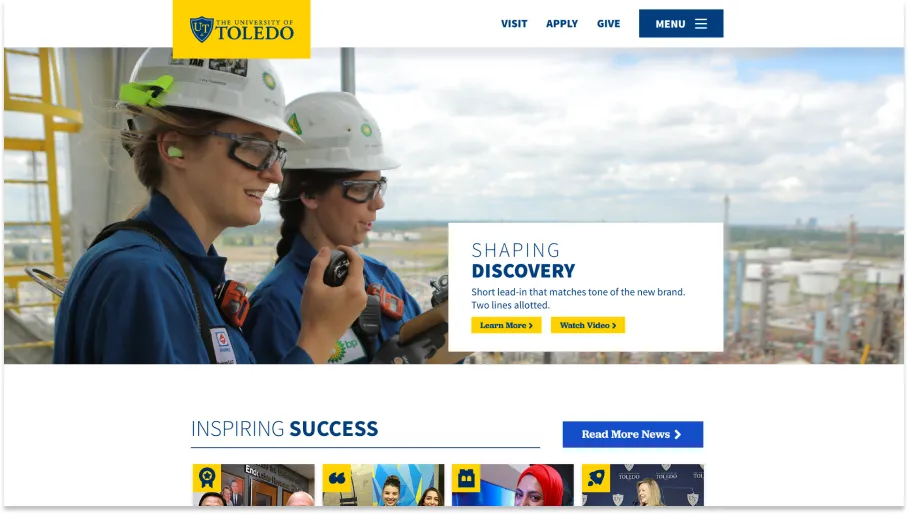
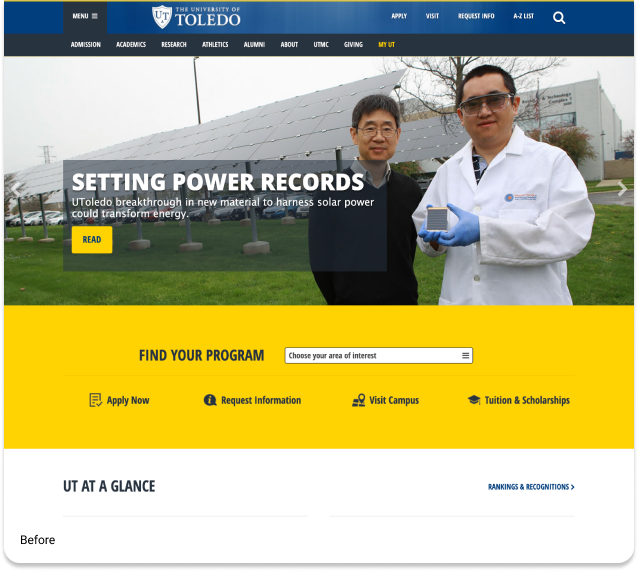
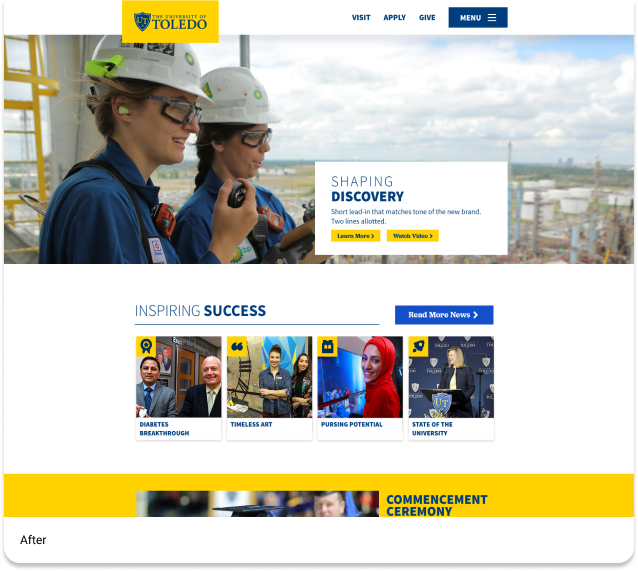
As part of a university-wide brand refresh, the University of Toledo set out to modernize its primary digital experience. The existing website had grown into a sprawling ecosystem of roughly 40,000 pages serving prospective students, current students, faculty, staff, alumni, patients, and the broader community. Years of incremental growth had resulted in inconsistent branding, an outdated mobile experience, and accessibility practices that no longer reflected modern web standards.
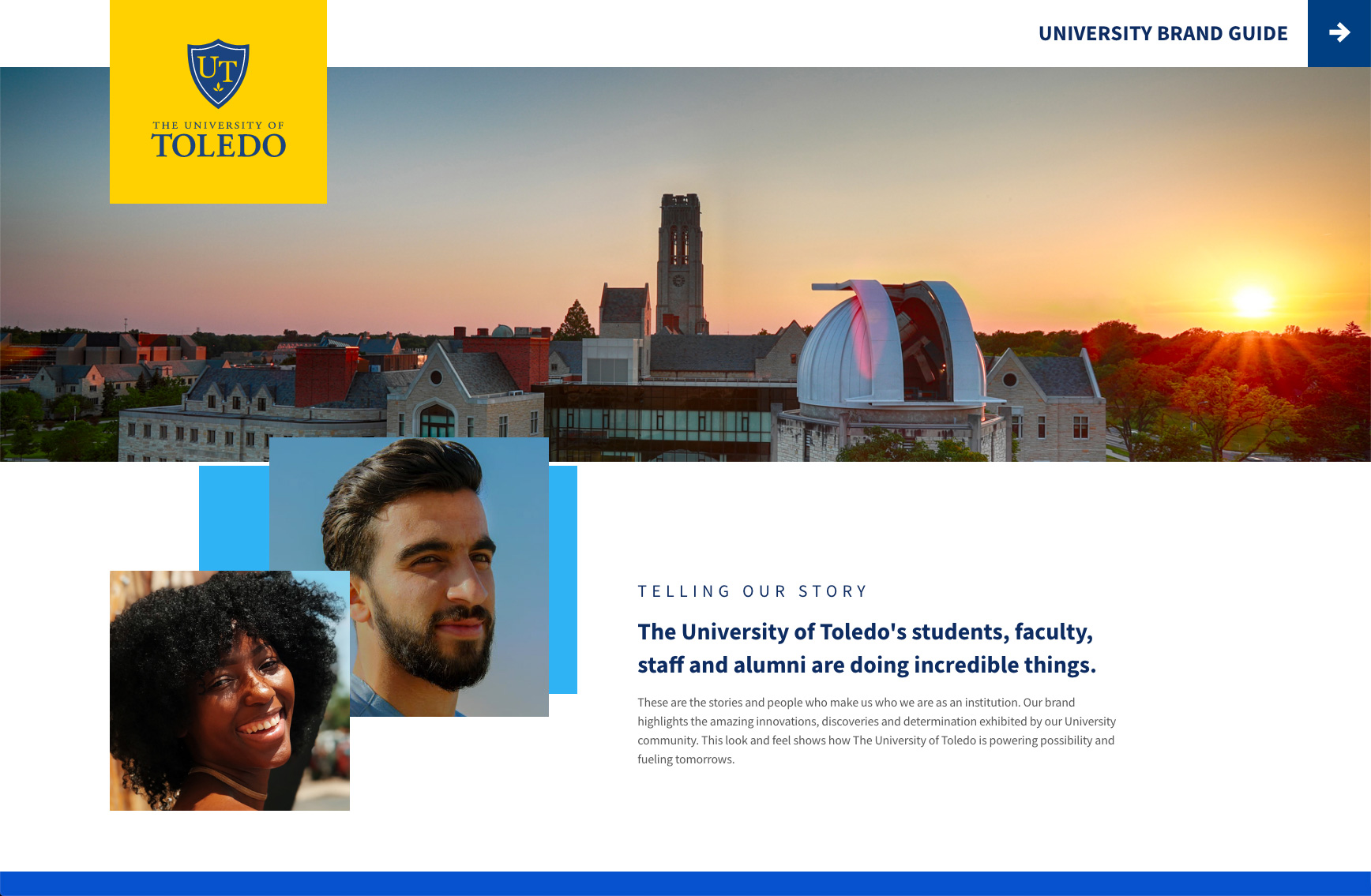
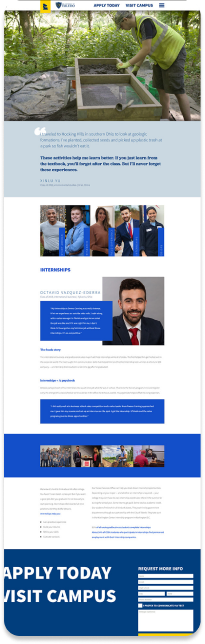
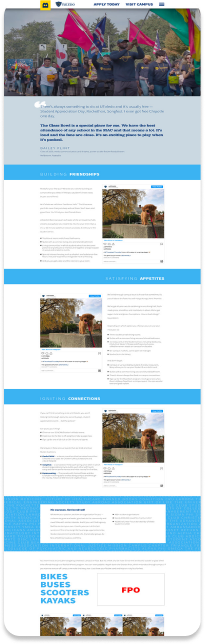
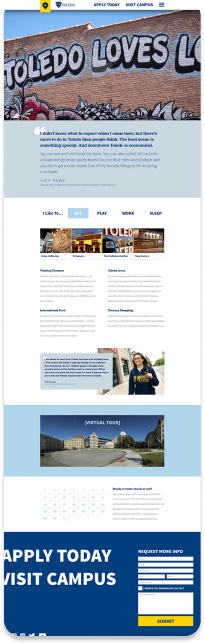
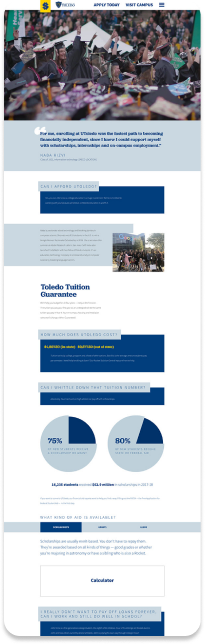
I led the website redesign for the university's web team, translating the new institutional brand into a scalable digital experience. Rather than rebuilding the site from the ground up, the project focused on introducing high-impact visual and interaction improvements that could be applied across thousands of pages while respecting the realities of a large, decentralized content ecosystem.
HIGHLIGHTS
MY ROLE
Owning design, UX, and brand implementation across the web experience.
I was the sole designer on the university's web team and led all aspects of the website's visual design, user experience, and digital brand implementation.
Working alongside a front-end developer, I established the visual standards for the redesigned experience, created reusable page patterns, and collaborated with content partners to ensure the new brand could be implemented consistently across the website. While an external agency developed the university's updated brand identity, I was responsible for translating those guidelines into a practical system that worked within the existing website.
THE CHALLENGE
Modernize a 40,000-page website without rebuilding it.
The redesign wasn't simply about refreshing the site's appearance—it was about modernizing a digital ecosystem that had evolved over many years.
The website served a wide range of audiences and included thousands of pages maintained by approximately 7,000 content authors across the university. Accessibility expectations had changed, responsive design had matured significantly since the previous redesign, and the institution had accumulated multiple brands that no longer felt cohesive online.
At the same time, the project's timeline and resources imposed important constraints. The site's underlying architecture, ownership model, and deep content hierarchy could not realistically be restructured as part of the brand launch. The challenge was finding the highest-impact improvements without disrupting the systems that kept the site running.
DESIGNING FOR SCALE
Create a redesign that could reach every page without touching every page.
Rather than treating the redesign as thousands of individual page updates, I approached it as a systems problem.
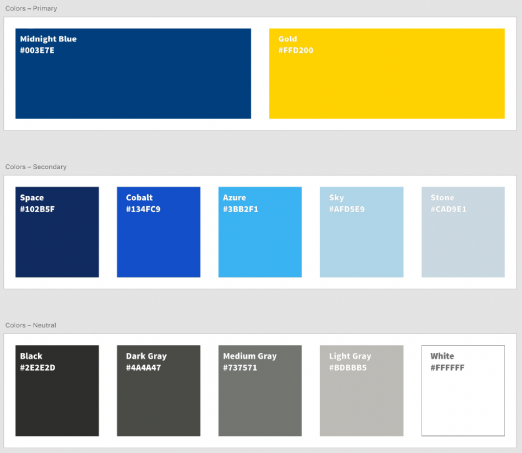
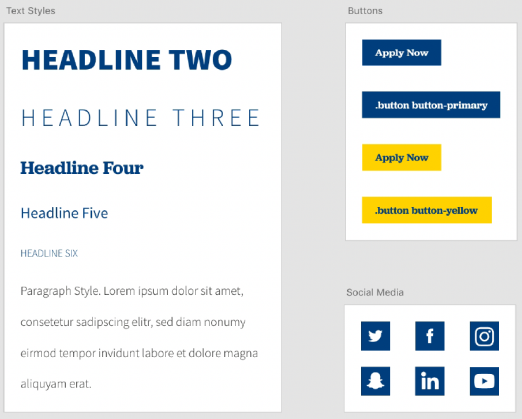
I focused on establishing consistent visual rules for typography, spacing, color, imagery, icons, and page structure that could be applied broadly across the website. These standards created a more unified experience while allowing departments to continue managing their own content without significant retraining or workflow changes.
One of the most important design decisions was intentionally limiting the scope of structural changes. Instead of attempting to reorganize the site's complex information architecture, I concentrated on improvements that would create the greatest visible impact while preserving existing ownership and governance across the university's content ecosystem.
This approach allowed our small team to deliver a redesign that felt comprehensive while remaining achievable within a three-to-four-month implementation timeline.
WORKING WITH CONSTRAINTS
Improve the experience without disrupting the people who maintained it.
Designing for a decentralized organization meant balancing technical limitations, stakeholder expectations, and long-term maintainability.
With thousands of distributed content authors, any solution needed to work for users with varying levels of technical experience. The redesign introduced meaningful visual improvements without requiring departments to relearn how they managed content or fundamentally changing the structure of pages they owned.
The project also required navigating feedback from a broad group of stakeholders while maintaining a consistent direction for the new digital brand. Success depended not only on creating effective design solutions, but on making thoughtful decisions about where change would deliver the greatest value—and where existing systems should remain intact.
OUTCOMES
A modern digital foundation built to scale.
The redesigned website successfully launched alongside the university's broader brand refresh, creating a more modern, accessible, and cohesive digital presence.
By focusing on scalable design decisions rather than isolated page redesigns, the project delivered visible improvements across a massive web ecosystem while remaining achievable for a small internal team operating under a fixed deadline.
The experience reinforced the importance of systems thinking, practical decision-making, and designing for organizations where long-term maintainability is just as important as visual execution.
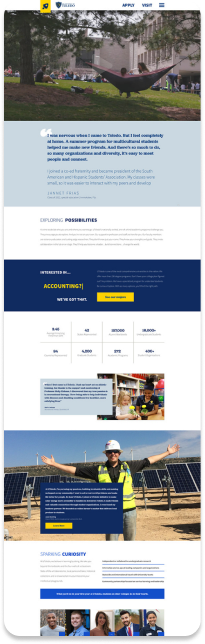
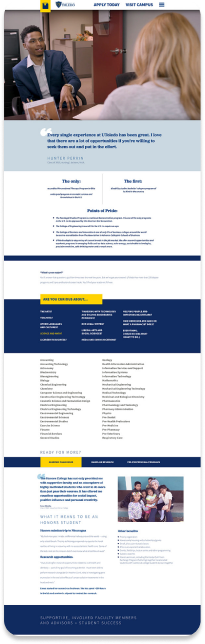
As part of the broader Fueling Tomorrows brand launch, I also designed a mobile-first recruitment microsite that received industry recognition for its responsive experience. The project earned a Gold Award in the 2021 Pride of CASE V Awards' website category, with judges specifically recognizing its mobile-first approach and audience-focused design.
Key Takeaways

Led visual design, UX, and digital brand implementation for the university website.
Translated a new institutional brand into scalable web standards.
Established reusable visual patterns for typography, spacing, color, imagery, and page layouts.
Modernized the mobile experience and aligned the site with evolving accessibility expectations.
Delivered high-impact improvements across a 40,000-page website without restructuring its underlying architecture.
Collaborated with engineering, content, and university stakeholders to launch the redesign within a three-to-four-month timeline.