
McGraw Hill Teaching Style Assessment
Transforming a teaching framework into an intuitive resource discovery experience.


OVERVIEW
Helping teachers find the right resources without asking them to speak McGraw Hill's language.
McGraw Hill Education provides a wide range of resources designed to support K–12 educators, but helping teachers find the right tools for their classroom presented a discovery challenge. With a large library of available resources, directing teachers to an unsorted collection of products required them to already understand what type of support they needed.
I designed and developed an interactive assessment experience that translated McGraw Hill's teaching style framework into a personalized resource discovery tool. By guiding teachers through a series of questions and mapping their responses to a recommended teaching approach, the experience created a more intuitive path from self-discovery to relevant classroom resources.
HIGHLIGHTS
MY ROLE
Designing the experience behind every question, score, and recommendation.
I designed the assessment interface and personalized results experiences, collaborated with the content writer on the question flow, developed the scoring implementation, and built the experience within Ion.
My responsibilities included creating the interactive question flow, implementing the scoring logic, designing the results page layouts, mapping each possible outcome to the correct experience, and thoroughly testing the assessment to ensure every response combination produced an accurate result.
THE CHALLENGE
Bridge the gap between how educators teach and how educational products are organized.
Teachers may have a strong understanding of how they teach, but they may not use the same terminology organizations use to describe instructional approaches. Asking educators to identify their own teaching style—or navigate a large collection of resources without guidance—created unnecessary complexity.
The goal was to create a more approachable way for teachers to understand their instructional preferences while helping McGraw Hill connect educators with resources that aligned with their classroom approach.
DESIGNING DECISIONS
Personalization began long before users ever saw their results.
The experience was built around McGraw Hill's existing teaching style framework, which positioned instructional approaches along a spectrum ranging from more lecture-based instruction (Guided Exploration) to more hands-on approaches (Activity-Based Learning).
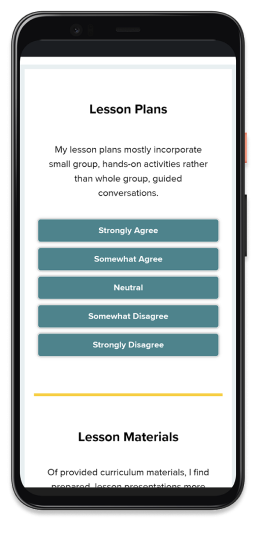
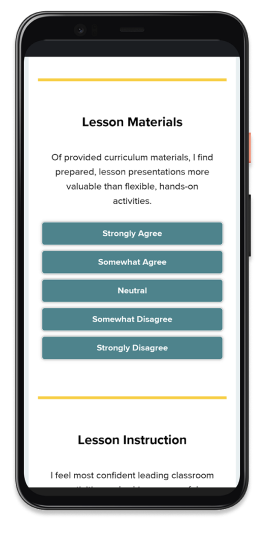
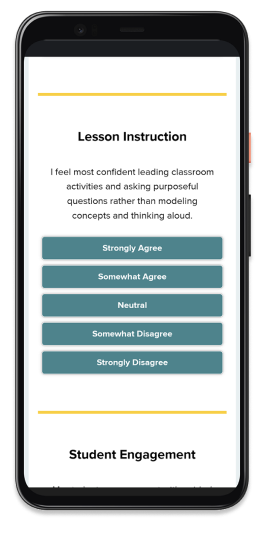
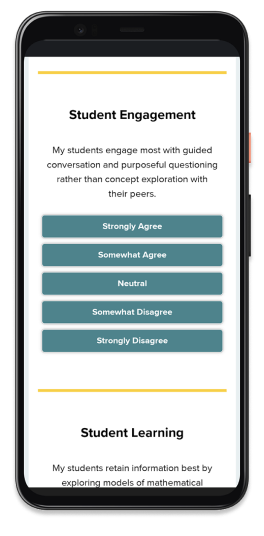
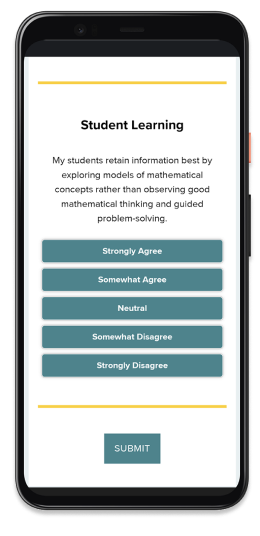
Rather than requiring teachers to self-identify their teaching style, the assessment used a series of preference-based questions to uncover patterns in their responses. Each answer contributed to a scoring model that placed users into one of five teaching style categories. The scoring logic remained completely invisible to users. Teachers did not need to understand how their result was calculated—the complexity was handled behind the scenes so they could focus on answering questions and receiving a personalized recommendation.
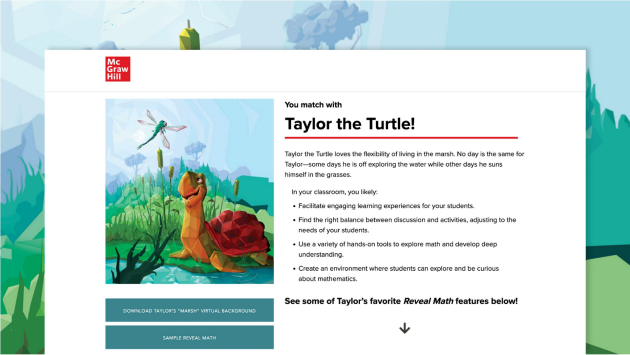
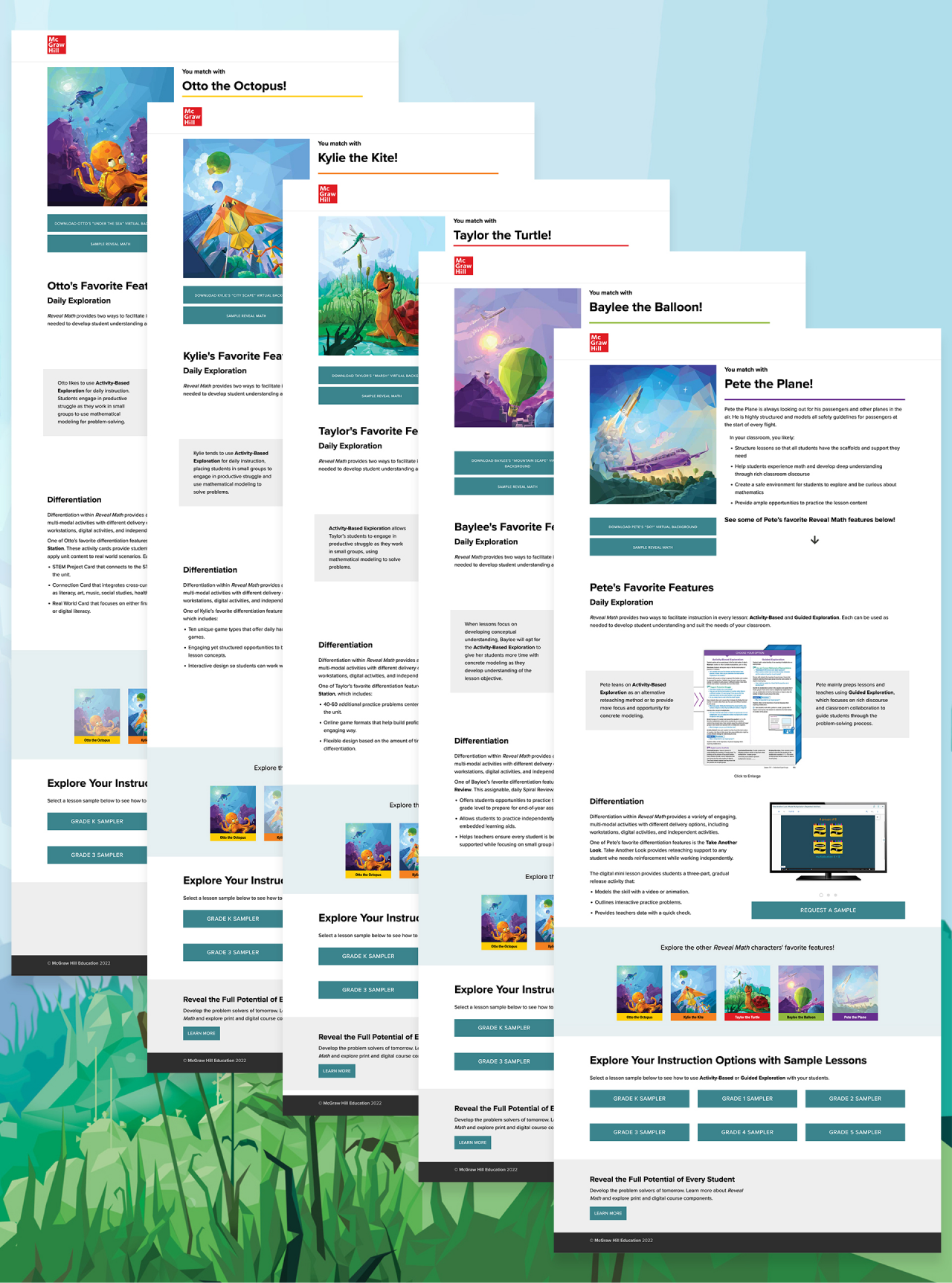
Each result page translated the recommendation into an approachable experience using McGraw Hill's branded character system. The pages explained the user's teaching style, provided relevant educational resources, offered downloadable materials, and guided users toward additional McGraw Hill resources.
BUILDING THE EXPERIENCE
Reliable recommendations depended on thoughtful logic behind the scenes.
A major part of the project involved ensuring that the assessment logic worked reliably across every possible user path.
I implemented the scoring model within Ion and tested the experience to ensure responses consistently mapped to the correct teaching style category. The assessment included five possible outcomes, each with its own personalized results experience.
I also partnered with the content writer to review the structure and wording of the questions. Because responses were collected through a Strongly Agree to Strongly Disagree format, we considered how question phrasing could unintentionally favor one teaching style over another. The goal was to create a more balanced assessment experience that allowed users' responses—not the wording of individual questions—to determine their result.
OUTCOMES
A personalized experience that simplified discovery through thoughtful UX.
The final experience provided educators with a more guided way to discover relevant McGraw Hill resources based on their teaching preferences.
Instead of asking teachers to navigate a broad collection of products and determine what might work for their classroom, the assessment created a personalized entry point based on their responses.
The project demonstrated how thoughtful experience design and technical implementation can transform a complex recommendation framework into a simple, approachable digital experience.
Key Takeaways

Designed and developed an interactive assessment experience within Ion.
Built and tested conditional experiences to ensure accurate results across all response paths.
Created the assessment interface, question flow, and personalized results layouts.
Collaborated with content partners to improve question structure and reduce unintended bias.
Implemented scoring logic that mapped responses to five teaching style outcomes.
Translated an existing teaching style framework into an intuitive educator-facing experience.